
If you’ve ever sat in a conference room straining to hear a keynote speaker, or watched an award ceremony get derailed by a screech of feedback, you already know how much sound determines the way people experience an event. In other words, a corporate event audio system decides whether your message actually lands or gets lost somewhere between the stage and the back row.
Get it wrong, and you’ll see dead spots where half the room can’t hear a word, feedback that makes everyone wince, muddy speech that has people leaning forward and squinting, and equipment that’s either wildly underpowered or needlessly complicated.
None of that is a great look, especially when you’ve put months into planning everything else. This guide walks through what goes into getting corporate event sound setup right, from the gear itself through to the planning steps and common mistakes worth dodging.
Why Corporate Event Audio Demands Professional Planning
It’s tempting to think sound is a “set it and forget it” job: plug in a speaker, clip on a mic, and you’re done. In reality, however, corporate event audio is far more situational than that.
Every venue behaves differently. A system that sounds crisp and full in a 100-person boardroom will fall flat in a 500-seat auditorium, and a rig built for a cavernous hall can feel overpowering and harsh in a tight meeting room. Every element of the setup, including ceiling height, wall materials, carpet or bare floor, and the number of people in the room soaking up sound, changes how audio travels.
There’s also a reputational side to this that’s easy to underestimate. Corporate events are, in a sense, an extension of your brand. If your keynote speaker can’t be heard clearly, or your corporate event audio cuts out at the worst possible moment, that reflects on the professionalism of your brand, not just the technical crew running the desk. Your guests will remember the moments things went wrong far more vividly than when everything worked smoothly.
On top of that, live corporate event sound behaves very differently to pre-recorded material. A keynote address, a panel discussion with multiple speakers passing a conversation back and forth, or a live product demonstration all demand different microphone handling, different mixing decisions, and quicker reactions than simply hitting play on a video file. Planning for conference audio setup means planning for the unpredictability of live speech, not just for a fixed soundtrack.
Core Components of a Corporate Event Audio System
Understanding the basic building blocks of a corporate event audio system makes it much easier to brief a provider properly, rather than just hoping they know what you mean by “good sound.” Typically, this setup includes:
Microphones
Microphones are the first decision point, and there are a few common options worth considering. Handheld mics suit MCs and speakers who move around and want direct control over their own volume and positioning. Lavalier (clip-on) mics free up a presenter’s hands, which matters for anyone using slides, gesturing, or demonstrating a product live. Boundary mics sit flat on a table or lectern and pick up sound from a wider area, which works well for panel discussions where several people are speaking without a mic each.
Mixing Console or Audio Interface
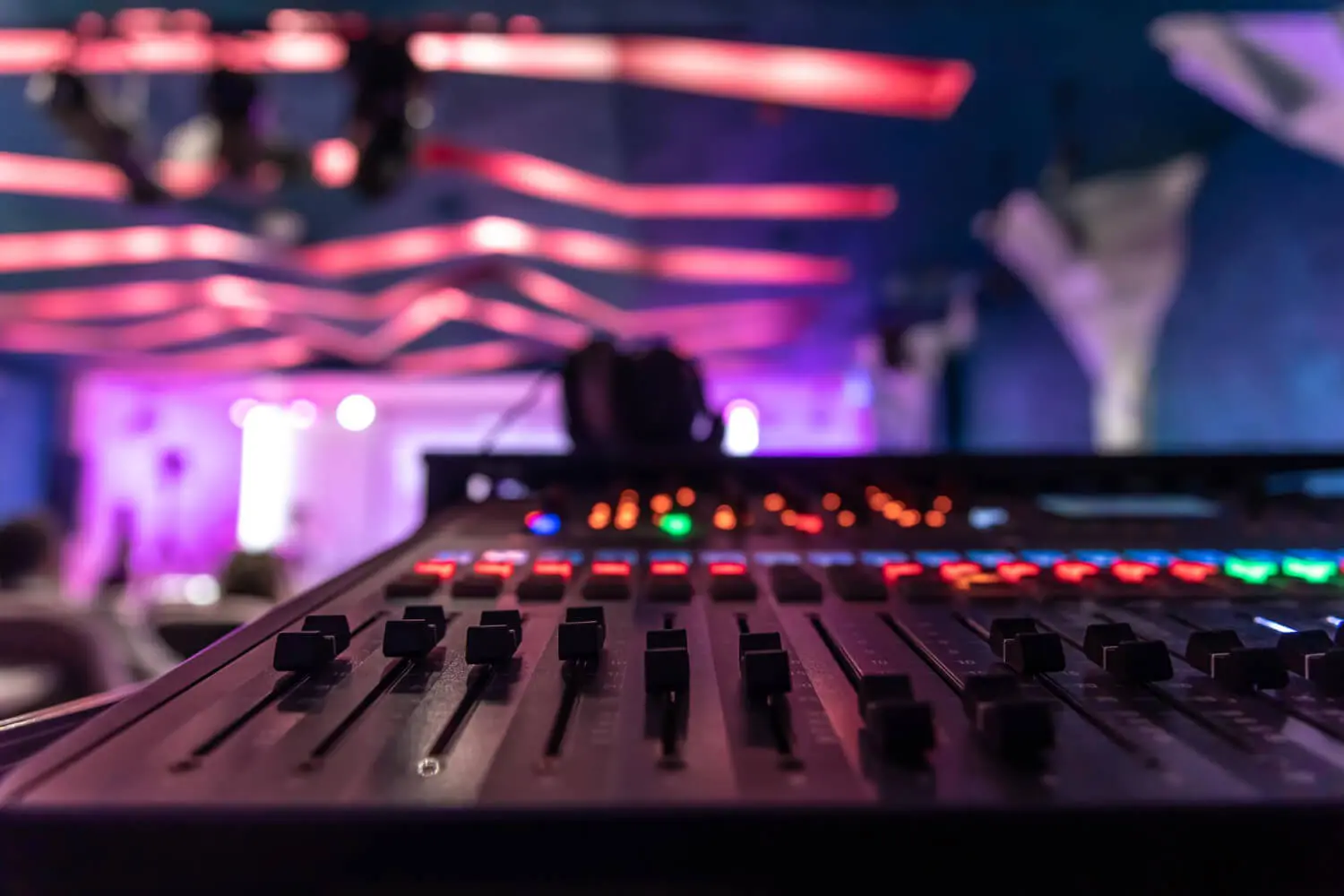
Next comes the mixing console or audio interface, which is essentially the control centre of the whole setup. This is where signals from every microphone, laptop, and playback device get routed, balanced, and adjusted in real time. A good sound mix technician can catch a mic that’s too hot before it feeds back, or bring up a quiet panellist so they’re not drowned out by a more confident speaker sitting next to them.
Finally, there are powered speakers or passive PA systems with amplification, which is what actually distributes sound around the room. This is where venue size and layout genuinely matter — the goal is even coverage from the front row to the back, without hot spots near the speakers or dead zones behind a pillar. This is one of the areas where professional corporate event sound system hire is a must, since consumer-grade gear generally isn’t designed to project cleanly across a large or acoustically tricky room.
Matching Audio Setup to Your Event Type
No two corporate events call for the same rig. Matching scale and features to the format saves money and prevents surprises.
Conferences
For conferences, clarity is king. Attendees need to follow speeches and panel discussions without effort, which means prioritising clean, intelligible microphone coverage over anything flashy.
If your conference includes breakout rooms or requires simultaneous translation, that adds another layer of planning. You need separate audio zones, additional receivers, and careful coordination so nothing bleeds between rooms.
Galas and Award Ceremonies
Galas and award ceremonies need a different balancing act. You’ve usually got background music running throughout the evening, plus live announcements, speeches, and applause breaks weaving in and out.
The trick is keeping speech intelligible over music without killing the atmosphere, and being especially careful around feedback during live microphone moments. Nothing kills the mood at an awards night like a piercing squeal right as someone steps up to accept their trophy.
Product Launches
Product launches tend to be the most technically layered of the three. There’s often a need to sync audio with visuals, video playback, or demo sound, alongside the presentation itself and any ambient music playing as guests arrive or mingle. Setting up an audio system for a product launch means thinking about presentation sound and ambient sound as two related but distinct jobs, not one single feed.
Key Planning Steps Before Booking a Sound System
A bit of groundwork before you book an event sound system hire makes an enormous difference to how smoothly the day goes.
Walk the Venue
Start by verifying venue acoustics and layout. Note the size, ceiling height and any pillars or alcoves that block sound. Hard floors and glass walls change how audio travels. A pre-event site visit reveals problems a floor plan hides.
Define the Audio Needs
Next, define your audio needs clearly. Are you covering keynote mics only, or do you also need background music, video playback audio, and live audience Q&A? Each of these adds a requirement to the brief, and a provider can’t scope the job properly without knowing the full picture.
Confirm Numbers and Seating
Confirm your attendance numbers and seating arrangement. This affects everything from speaker placement to how much power the system needs to push sound evenly to the last row. A brief covering a rough headcount and seating style gives your event sound system hire what they need to size the system correctly rather than guessing.
Note the Run Sheet Timing
Finally, flag when music plays, when speakers take the stage and when demos run. This helps the operator prepare each transition.
Common Audio Mistakes and How to Avoid Them
Most corporate event audio system failures trace back to a handful of avoidable mistakes. Learning them ahead of time keeps them off an event.
Skipping the Sound Check
Rushed or missing rehearsals cause the most trouble. Speakers turn up unfamiliar with their mics, transitions go untested and last-minute changes catch the crew off guard. A proper sound check with the actual presenters, run through each segment, catches issues while there’s still time to fix them.
Poor Speaker and Mic Placement
Poor speaker placement or mic technique shows up as feedback, dead spots, or sections of the room where the audio just doesn’t reach properly. Often this comes down to mic angle and distance from the speaker’s mouth, or placing a monitor speaker too close to a live microphone.
Mismatched System Scale
Undersized amplification leaves a large room straining to hear. Oversized, over-complex corporate event sound setups waste budget on a simple panel discussion. Matching the rig to the room and the format keeps both clarity and cost in check. A short panel for 60 people does not need a festival rig, and a 400-seat gala needs more than a pair of small speakers.
Frequently Asked Questions About Corporate Event Audio
Ready to Get Your Corporate Event Audio Right? Let’s Talk!
Professional corporate event audio is a technical discipline in its own right. It weighs up the venue, the equipment, the speakers, and the people operating everything on the event day. It’s not something that gets sorted with a quick trip to an electronics store and a checklist ticked off the night before. Putting real thought into corporate event audio planning protects the reputation of your event and gives your message the best chance of landing clearly with every person in the room.
That’s where Audisound comes in. We have over 30 years of experience setting up professional sound systems for conferences, galas, and product launches across Mildura and Northwest Victoria.
Get in touch with our team today to talk through your event’s audio requirements and get a personalised quote.