
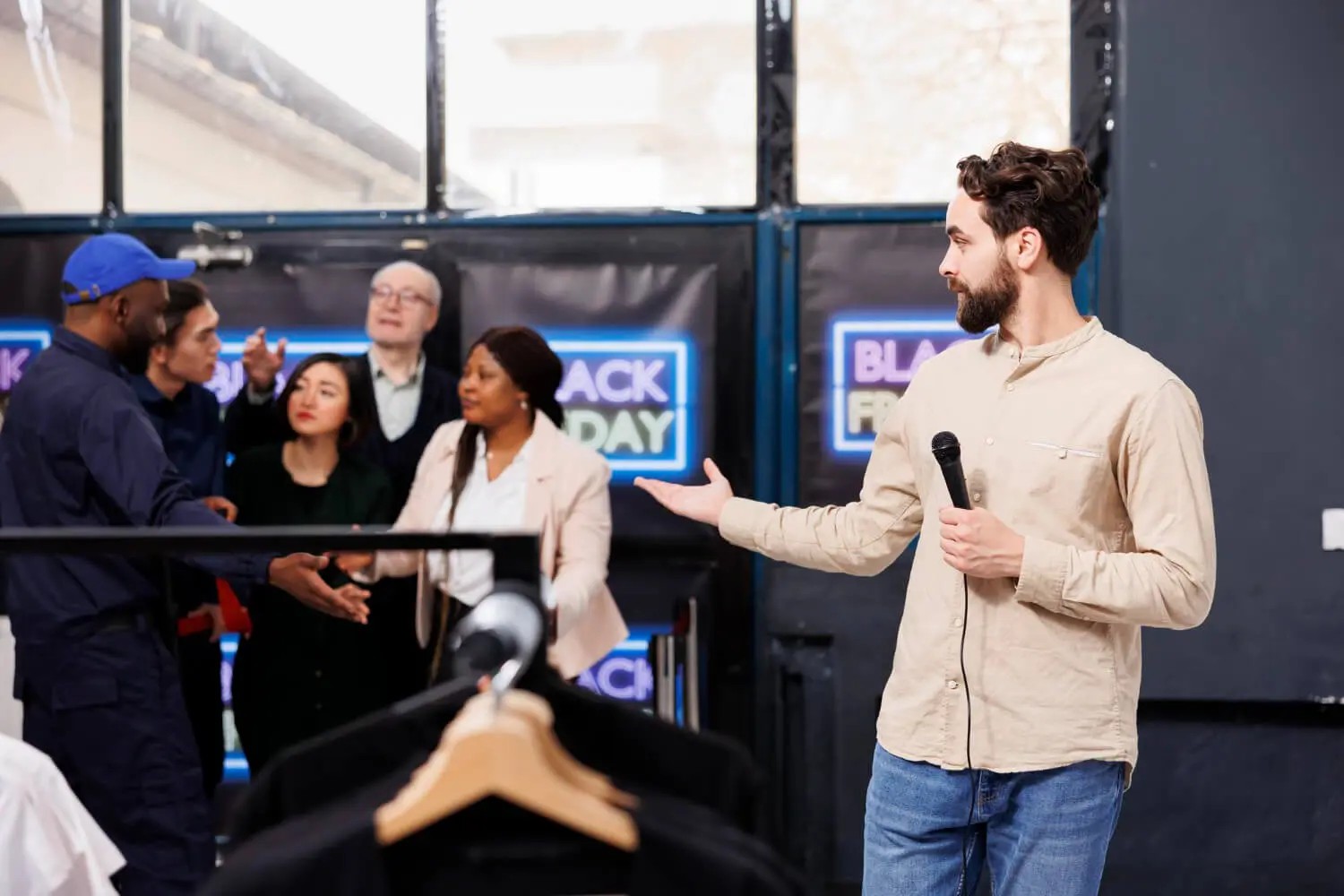
A clear, balanced sound system can make or break a corporate event. Whether it’s a board presentation, an annual awards night, or a hybrid conference, how professionally your event “sounds” is typically what guests remember most.
Fortunately, choosing the right corporate event sound system has far less to do with the biggest speakers than with matching the setup to your venue, headcount, and format. And you don’t need to be an audio engineer to get it right. You just need to know which questions to ask.
At Audisound, we’ve supported conferences, launches, and business events across Mildura and Northwest Victoria for over three decades. In this guide, we cover the practical decisions behind a great sound system for corporate events, from core components to costs, so your corporate event AV hire supports your message rather than distracting from it.
Start With Your Event, Not the Equipment: 5 Questions to Answer First
Poor event sound usually traces back to a single mistake: choosing equipment before understanding the event. Before looking at speakers or microphones, define what your event requires.
Start by considering five core questions:
- What’s the event format? A keynote, panel, or gala dinner each demands a different audio approach.
- How many people are attending, and what’s the room shape? A long, narrow venue needs speakers positioned very differently from a wide ballroom or multi-room setup.
- Is your focus speech, music, or both? Clear speech for presenters requires different sound dynamics than upbeat background playlists.
- Is it indoors, outdoors, or hybrid? Each environment affects sound clarity and equipment needs.
- How many microphones do you need at the same time? Panels, Q&A sessions, and emcees all add channels.
Once you have these answers, choosing the right sound system for your corporate event becomes far more effective.
The Core Components of a Corporate Event Sound System Explained
Most corporate event sound systems have the same essential building blocks. Each part plays a specific role in creating balanced, professional audio, backed by reliable cabling and signal management.
Microphones: Handheld, Lapel, Lectern, and Headset
Microphones are your starting point. Wireless handheld microphones suit MCs and roaming Q&A participants, while lapel or headset mics free presenters’ hands for gestures and remote clickers. For formal speeches, lectern gooseneck mics provide fixed, professional clarity.
With any wireless setup, channels must be planned carefully to avoid interference. Most professionals coordinate frequencies in advance rather than hoping signals stay clear. You can explore a potential company’s AV services to see how these pieces come together for different event types.
Matching Sound System Size to Your Headcount and Venue
System size depends on more than a guest list. Room shape, ceiling height, and whether your event centres on speech or music all shift the requirements. Still, a few practical guidelines help you sanity-check whether a proposed event audio setup is right-sized.
Up to 50 people: A compact speaker pair is usually enough, especially for speech-focused gatherings.
50 to 150 people: Plan for two to four distributed speakers along with multiple microphone channels to cover presenters and audience participation.
150 to 300 people: Add fill speakers to reach the back of the room, a subwoofer if music is involved, and a dedicated operator to manage the live mix.
For public events above 300 guests, larger systems like line arrays provide consistent coverage and power. Under-powering a system leads to distortion as it strains to fill the space, while over-specifying simply wastes budget on capacity you will never use.
How Venue Acoustics and Speaker Placement Change Everything
The same equipment can sound crisp in one room and muddy in another. The difference is the space itself.
Hard surfaces like glass, concrete, and polished floors bounce sound around and create an echo that muddies clarity. Softer elements, including carpet, curtains, and the seated bodies of your guests, absorb sound and tame this reverb. A room that feels echoey during setup will typically settle once it fills with people.
Good technicians adjust speaker height and angle based on layout, not formulas. Main speakers are typically placed just ahead of microphones and elevated above ear level to improve projection.
Outdoor events need more power because open air doesn’t reflect sound. A professional AV hire includes a sound check and room tuning to customise your setup precisely to the venue.
Budgeting for Sound Hire Without Cutting the Wrong Corners
The cost of corporate event sound hire comes down to a handful of factors:
- The number of speakers and microphones
- Whether an operator is included
- How long the event runs
- The setup time required
- How easy the venue is to access
Viewed the right way, this spend protects the far larger investment you have made in the event as a whole.
Be cautious with supply-only bargains. A low price typically means you or your team are left assembling and testing equipment yourselves, with no support if something goes wrong. A wet hire, by contrast, means the provider delivers, sets up, tests, operates, and packs down the entire system.
Requesting an itemised quote allows for transparency and helps compare value between providers. Also, book early for busy seasons like December awards nights and mid-year conferences to lock in your preferred equipment and crew.
6 Common Sound System Mistakes at Corporate Events (And How to Avoid Them)
Even well-planned events stumble on a few recurring issues. Use this checklist to pressure-test your own plan.
Sizing By Headcount Alone
It’s tempting to pick a system based purely on how many guests are attending, but numbers only tell half the story. A room’s acoustics and shape can make a perfectly adequate system sound thin, echoey, or uneven. Always factor in the space, not just the guest list.
Skimping on Wireless Mics and Channels
Cutting back on microphones is one of the fastest ways to disrupt an event. When a full panel is forced to share a single mic, the conversation stalls every time it changes hands, and the energy in the room drops with it.
Enough mics, properly coordinated across separate channels, keep discussions flowing and every voice clearly heard.
No Dedicated Operator
Sound isn’t something you switch on and walk away from. Without someone actively riding the mix, minor issues like feedback, open mics, and volume lurches can snowball quickly. An operator smooths all of it out in real time, so the room only ever hears the polished version.
No Backup Plan
Live events are unpredictable, and a single failure can stop everything cold. A flat battery with no replacement, or one mic dying mid-speech with nothing to swap in, becomes the moment your event is remembered for.
Spare batteries, backup microphones, and redundant cabling keep a small glitch from ever reaching your audience.
No Time for a Sound Check
When setup runs late, the sound check is usually the first thing sacrificed, and it’s the one step you can least afford to skip. A proper check confirms the room sounds right while there’s still time to fix anything quietly, well before guests arrive.
Forgetting the Streaming Feed
Hybrid events come with an audience you never see, and their experience slips through the cracks all too easily. Treat the remote audio as an afterthought, and your online viewers get the worst seat in the house. A dedicated feed gives them sound as clear as anyone sitting in the front row.
Professional AV teams plan redundancies for each risk so your event runs smoothly from first word to closing applause.
When to Hire a Professional AV Team Instead of Managing It Yourself
Small internal meetings can work with in-house audio. But once your event includes multiple presenters, live mixing, streaming, or complex venues, it’s time to bring in professionals.
An experienced AV team handles frequency coordination, live mixing, sound distribution, safety compliance, and troubleshooting on the fly.
With over 30 years supporting corporate, public, and hybrid events across Mildura and Northwest Victoria, Audisound provides full wet hire, from system setup to live operation and post-event pack down.
Frequently Asked Questions
Getting Your Event Sound Right the First Time
The best corporate event sound system is never simply the biggest or the cheapest. It is the one matched precisely to your format, headcount, and venue, backed by professional setup and a tested backup plan. Get these fundamentals right, and your audio will let your message take centre stage, exactly as intended.
Audisound brings more than 30 years of wet-hire AV experience to corporate and public events across Mildura and Northwest Victoria. If you want your next event to sound its best, talk to the Audisound team for a personalised recommendation and quote.