
Has this happened to you?
You’re sitting in a restaurant where you have to lean halfway across the table, raising your voice over the clatter of plates and the echo of a dozen other conversations. Or maybe you’re at a concert where the bass thumps through your chest, but you can’t understand a single lyric.
Not exactly the great night out you were picturing.
Sound shapes our experiences far more than most of us realise. You can have incredible food, an impressive stage, or a beautifully designed event space. But if the event venue acoustics are wrong, the whole atmosphere suffers.
Let’s look at what separates good acoustics from bad acoustics, and how smart sound design can turn an ordinary event into something unforgettable.
The Basics of Venue Acoustics
Venue acoustics is just how sound moves and behaves inside a space.
You’ve probably noticed it without realising. Talk in a small, furnished room, and everything sounds clear. Say the same thing in a big empty hall, and suddenly your voice echoes and feels harder to follow. The difference comes down to acoustics.
Reflection vs Absorption
The two big players here are reflection and absorption.
Hard surfaces like glass, tiles, and concrete bounce sound back into the room. It’s what makes restaurants or gymnasiums feel extra loud when they fill up with people.
On the other hand, soft materials like curtains, carpet, or padded panels absorb sound. They help create a cleaner, more comfortable atmosphere where sound tends to linger.
If a space has too many hard surfaces, it’ll feel loud and chaotic. Add some softer elements, and the sound becomes a lot more controlled.
Reverberation Time (Why Some Rooms Sound Messy)
Reverberation time refers to how long sound continues to linger in a space after it’s produced.
If sound lingers for too long, it starts to overlap with the next word or note. This can reduce clarity, particularly during speeches or presentations.
In some settings, like concert halls, a longer reverberation time can enhance the experience by adding depth to music.
But in venues focused on speech, such as conferences or corporate events, too much reverberation can make it difficult for the audience to follow along.
Getting this balance right is key to creating a space where sound feels clear, controlled, and comfortable to listen to.
Real-Life Examples: Good vs Bad Acoustics
The difference between good acoustics and bad acoustics isn’t subtle. It can completely change how an event feels, how clearly people hear, and how much they enjoy the experience.
Here are two examples that show both sides of the coin.
Example of Good Acoustics
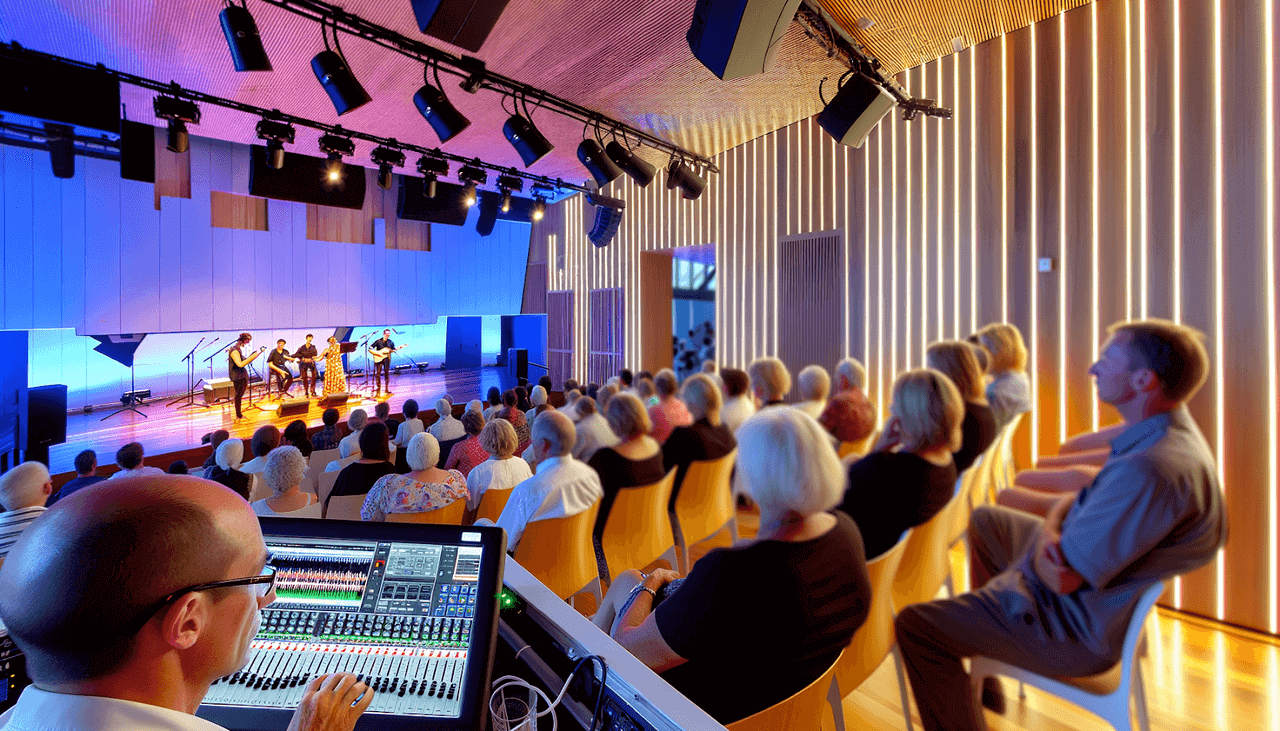
The Adelaide Festival Centre is a great example of a venue where sound has been properly thought through. The space uses a mix of materials and carefully angled surfaces to control how sound moves. While the timber elements help add warmth, the design keeps everything clear and balanced.
The result is a balanced, clear sound. Music carries well without becoming overwhelming, and speech is easy to follow from anywhere in the room.
Example of Bad Acoustics
Now compare this to a typical indoor sports facility with hard, reflective surfaces throughout. Large open areas, metal structures, and bare walls allow sound to bounce around with very little control.
Announcements blur into a muffled mess, commentary becomes impossible to follow, and what should be an energetic atmosphere turns into pure noise. It’s the perfect example of bad acoustics.
Factors That Impact Venue Acoustics
A few outside factors can change how a space sounds, sometimes quite a bit. Even a well-designed venue can behave differently depending on what’s happening inside and around it.
Environmental Factors
Mother Nature has her own way of playing with sound. Outdoor venues are especially unpredictable: temperature shifts, humidity, and even a light breeze can change how sound travels.
Warm air and cool air carry sound differently, which means the way something sounds in the afternoon might not be the same later in the evening. For this reason, outdoor events need careful planning. What sounds fine during setup can shift once conditions change.
Audience Size and Layout
People themselves are part of the acoustic equation. A packed venue naturally absorbs more sound. But when the crowd thins out, like at a half-empty stadium, every echo and stray sound stands out. A buzzing audience adds to the atmosphere and genuinely helps the event venue’s acoustics.
Why Proper Acoustics Can Make or Break Your Event
You can have the perfect lighting, décor, and catering, but if no one can hear what’s going on, the mood takes a nosedive. Clear, balanced sound helps people connect and genuinely enjoy the experience.
Boosting Focus and Enjoyment
Good acoustics also make it easier for people to connect.
In a well-balanced space, voices carry clearly without needing to be raised. Conversations feel natural, whether it’s a business discussion or a quick chat between guests. There’s no need to lean in, repeat things, or guess what was said.
Together, this creates a more comfortable atmosphere where people are happy to speak up, join in, and stay involved. It leads to better discussions, smoother presentations, and a more engaging overall experience.
Encouraging Real Connection
When everyone can speak and be heard without shouting, interactions become warmer and more natural. It’s easier to laugh, chat, and share those buzzing moments that make an event memorable. Whether it’s colleagues swapping ideas at a conference or guests raising glasses at a wedding, good sound turns a crowd into a community.
The Final Word on Event Venue Acoustics
There you have it. The ins and outs of why venue acoustics are far more important than you might have initially thought. Whether you’re hosting a musical extravaganza or a low-key corporate gig, understanding and managing the acoustics can elevate your event from “meh” to memorable.
So, the next time you pick a venue, consider how the space will sound, not just how it’ll look.
At AudiSound, we design and deliver acoustic solutions that transform ordinary spaces into unforgettable experiences. From corporate events to live performances, we’ll help you create the perfect sound environment. Contact us to explore our acoustic design services.